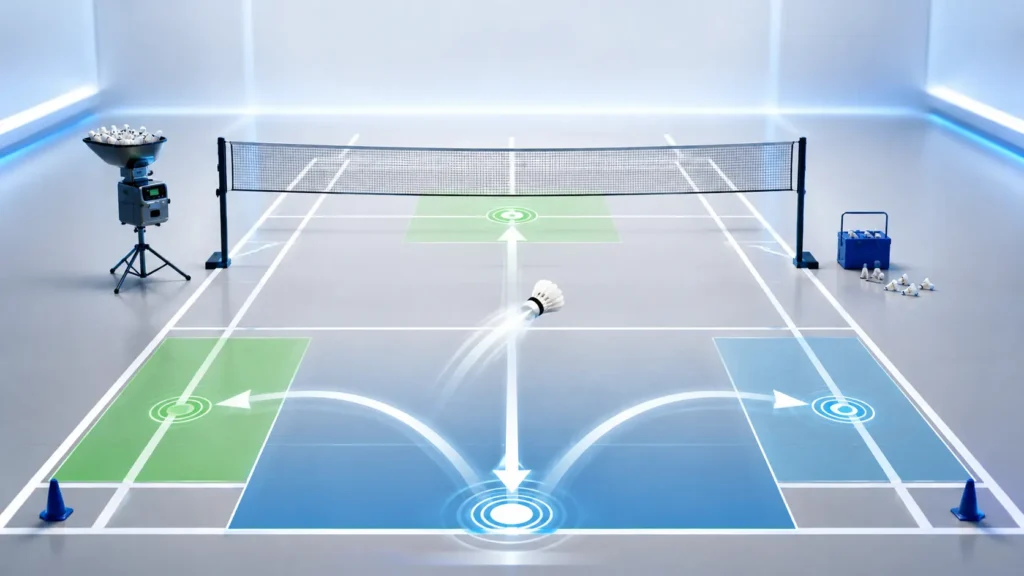
Badminton is one of the fastest sports in the world. The shuttle can move in a split second, and if your reaction time is slow, you will always feel one step behind. That is why badminton reaction drills are so important.
Good reaction speed helps you return smashes faster, move earlier, defend better, and stay calm during quick rallies. Even skilled players struggle when their reactions are slow. The good news is that reaction speed can improve with the right training.
In this guide, you will learn the best badminton reaction drills, why they work, and how to practice them the right way. These drills are simple, effective, and useful for beginners, intermediate players, and advanced players.
Why Badminton Reaction Drills Matter
Badminton is not only about power and technique. It is also about quick decisions.
During a rally, you must:
- Read your opponent’s movement
- Predict the shuttle direction
- Move your feet quickly
- React in less than a second
- Recover fast for the next shot
This is where badminton reaction drills make a huge difference.
Players with fast reactions often look smoother on court because they reach the shuttle earlier. They have more time to choose the best shot instead of panicking.
Regular reaction training can help you:
- Improve court speed
- Defend smashes better
- Increase footwork speed
- Improve hand-eye coordination
- Return difficult shots with control
- Stay balanced during fast rallies
The best part is that most badminton reaction drills do not need expensive equipment.
How Often Should You Practice Reaction Drills?
For most players, 15 to 25 minutes of reaction training is enough.
You can add badminton reaction drills:
- Before practice sessions
- During footwork training
- After warm-ups
- On fitness days
Training reactions 3 to 4 times each week is usually enough to see progress.
Do not train too long. Reaction training works best when your body and mind stay fresh.
Best Badminton Reaction Drills
Below are some of the most effective badminton reaction drills used by players and coaches.
Shadow Reaction Drill
This is one of the simplest badminton reaction drills for beginners.
How To Do It
- Stand in the center of the court
- Ask a partner to point randomly toward corners
- Move quickly toward the pointed area
- Recover back to the center after each movement
- Continue for 30 to 60 seconds
Why It Works
This drill improves:
- Footwork reactions
- Balance
- Direction changes
- Court recovery speed
The faster your partner changes directions, the harder the drill becomes.
Multi-Shuttle Reaction Drill
Many coaches use this drill because it closely matches real game speed.
How To Do It
- One player stands on court
- The coach or partner feeds shuttles quickly to different areas
- React and return every shuttle as fast as possible
- Focus on movement and recovery
Why It Works
This badminton reaction drill trains:
- Fast decision-making
- Defensive reactions
- Explosive movement
- Quick racket preparation
Start slowly and increase feeding speed over time.
Wall Rally Reaction Drill
This drill is perfect if you train alone.
How To Do It
- Stand close to a wall
- Hit the shuttle softly against the wall
- Keep the rally going continuously
- Try changing speed and angles
Why It Works
The shuttle returns quickly from the wall, forcing fast reactions.
This badminton reaction drill improves:
- Hand-eye coordination
- Wrist control
- Reaction timing
- Racket speed
Try shorter reaction distances to increase difficulty.
Random Color Cone Drill
This drill mixes mental focus with movement speed.
How To Do It
- Place colored cones around the court
- A partner calls a random color
- Move quickly to touch that cone
- Return to the center position
Why It Works
This badminton reaction drill improves:
- Brain processing speed
- Footwork reactions
- Direction changes
- Focus under pressure
You can also use numbers instead of colors.
Smash Defense Reaction Drill
Fast smash defense separates good players from average players.
How To Do It
- A partner smashes repeatedly from the backcourt
- Defend using blocks, lifts, or drives
- React quickly without guessing early
Why It Works
This is one of the best badminton reaction drills for doubles players.
It helps improve:
- Defensive reflexes
- Racket readiness
- Balance during pressure
- Fast arm reactions
Keep your racket high and stay light on your feet.
Mirror Footwork Drill
This is a fun drill for two players.
How To Do It
- One player becomes the leader
- The second player copies every movement instantly
- Move forward, backward, left, and right
- Change speed often
Why It Works
This badminton reaction drill trains:
- Movement reading
- Reaction speed
- Court awareness
- Quick recovery
Short rounds with high intensity work best.
Balloon Reaction Drill
This drill may look simple, but it works surprisingly well.
How To Do It
- Use one or two balloons
- Hit them upward randomly
- Try keeping them from touching the ground
- Move constantly during the drill
Why It Works
The floating movement of balloons forces your brain to adjust quickly.
This badminton reaction drill improves:
- Tracking ability
- Coordination
- Fast movement adjustments
- Timing control
This is especially useful for young beginners.
Light Reaction Drill
Many modern training centers use reaction lights.
How To Do It
- Place reaction lights around the court
- One light turns on randomly
- Sprint quickly and touch it
- Return to starting position
Why It Works
This badminton reaction drill develops:
- Explosive first-step speed
- Visual reactions
- Agility
- Mental alertness
If you do not have reaction lights, a partner can call directions instead.
Net Kill Reaction Drill
Fast net play wins many badminton points.
How To Do It
- A partner tosses shuttles near the net randomly
- React quickly with net kills or pushes
- Recover immediately after each shot
Why It Works
This badminton reaction drill improves:
- Front-court speed
- Racket reactions
- Net dominance
- Fast attacking reflexes
Stay low and keep your racket in front.
Drive Exchange Drill
This drill is great for doubles players.
How To Do It
- Stand close to your partner
- Exchange fast drive shots continuously
- Increase speed gradually
- Keep rallies flat and controlled
Why It Works
Fast drive exchanges force instant reactions.
This badminton reaction drill helps improve:
- Racket speed
- Reaction timing
- Shoulder endurance
- Fast defensive responses
Keep your grip relaxed for faster reactions.
Common Mistakes During Reaction Training
Many players practice badminton reaction drills the wrong way.
Here are some common mistakes to avoid.
Training Too Slowly
Reaction drills only work when speed feels challenging.
If every movement feels easy, your body will not improve much.
Forgetting Recovery Movement
Some players move quickly to the shuttle but recover slowly.
Always return to the ready position after every shot.
Standing Flat-Footed
Stay light on your toes.
Flat feet slow your reactions and make movement harder.
Ignoring Technique
Speed matters, but technique still matters too.
Bad movement habits can reduce your court efficiency.
Training While Tired
Reaction speed drops when your body is exhausted.
Short, focused sessions work better than very long sessions.
Tips To Improve Reaction Speed Faster
Along with badminton reaction drills, these habits can improve your progress.
Watch Your Opponent Carefully
Many fast players react early because they read body movement before the shot happens.
Watch:
- Shoulder position
- Racket angle
- Foot placement
- Swing direction
Improve Your Fitness
Stronger legs and better stamina improve reaction speed naturally.
Focus on:
- Sprint training
- Jump exercises
- Agility ladders
- Core workouts
Train Your Split Step
The split step is one of the most important movements in badminton.
A good split step helps your body react faster in every direction.
Stay Relaxed
Tight muscles slow reactions.
Relax your shoulders, hands, and grip during rallies.
Practice Consistently
Reaction speed improves over time.
Even 15 minutes of badminton reaction drills several times each week can create noticeable improvement.
Sample 20-Minute Badminton Reaction Drill Routine
If you want a simple training plan, try this routine.
Warm-Up – 5 Minutes
- Light jogging
- Dynamic stretches
- Basic footwork
Reaction Training – 12 Minutes
- Shadow reaction drill – 3 minutes
- Multi-shuttle drill – 3 minutes
- Drive exchange drill – 3 minutes
- Net kill reaction drill – 3 minutes
Cool Down – 3 Minutes
- Slow walking
- Stretching
- Deep breathing
This short routine can improve court reactions quickly when practiced regularly.
Are Badminton Reaction Drills Useful For Beginners?
Yes, absolutely.
Many beginners focus only on learning shots, but reactions are just as important.
Simple badminton reaction drills help beginners:
- Move better
- Build confidence
- Learn court balance
- Improve coordination
- Feel more comfortable during rallies
Beginners should start with slower drills and increase speed gradually.
Final Thoughts
Badminton is a fast sport, and fast reactions can completely change your performance.
The good thing about badminton reaction drills is that they work for every skill level. Whether you are a beginner learning movement or an advanced player improving defense, reaction training helps you become quicker, calmer, and more confident on court.
Start with simple drills, focus on consistency, and increase speed over time.
Even small improvements in reaction time can help you win more rallies, defend stronger smashes, and move around the court with much better control.
If you truly want to become a faster badminton player, adding badminton reaction drills to your weekly training is one of the smartest things you can do.