
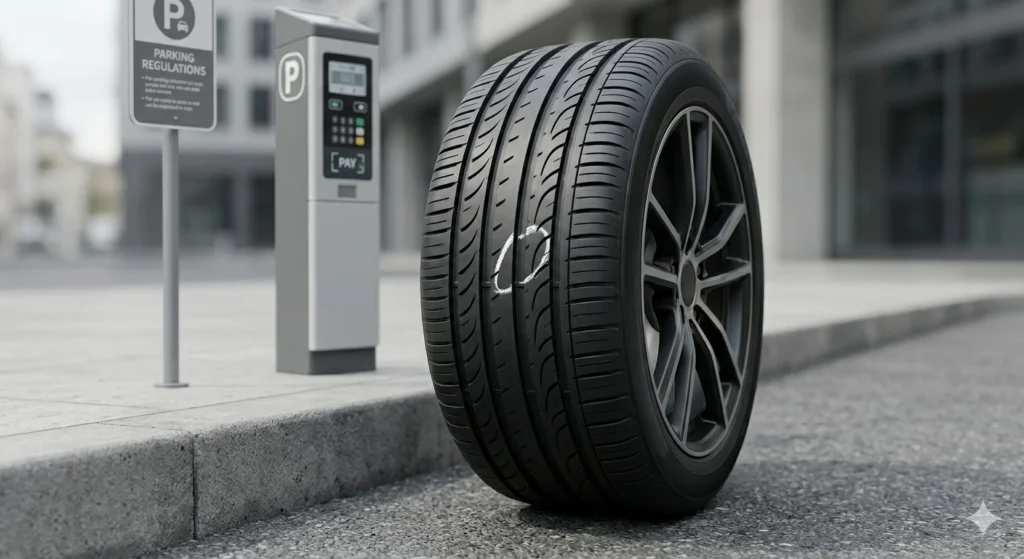
So, what does chalk on tires do?
Have you ever walked back to your car and noticed a small chalk mark on your tire? It feels random. It feels strange. And yes—it makes people curious.
The short answer: it’s used to track how long a car has been parked.
But there’s more to it than that. Once you understand why it’s done, you’ll start noticing it everywhere—and it will finally make sense.
Let’s break it down in the simplest way possible.
What Does Chalk on Tires Do? (Simple Answer)
Chalk on tires is used by parking enforcement officers to mark a vehicle and check if it moves.
Here’s how it works:
- An officer puts a small chalk line on your tire
- They note the time
- After some time, they come back
- If the chalk mark hasn’t moved, your car hasn’t moved
- If your time limit is over → you may get a ticket
That’s it. No hidden tracking. No damage. Just a simple method to monitor parking.
Why Do Officers Use Chalk on Tires?
Now you might wonder—why chalk? Why not something else?
Here are the real reasons:
1. It’s Fast and Cheap
Chalk is simple. No tech needed. No devices. Just mark and go.
2. It Doesn’t Damage Your Car
Unlike paint or stickers, chalk washes off easily.
3. It’s Easy to See
Officers can quickly check if the line moved or not.
4. It Works Without Technology
No cameras. No sensors. It works even in small towns or low-budget areas.
So when asking what does chalk on tires do, the answer becomes clearer—it’s a low-cost parking tracking tool.
How the Chalk System Actually Works (Step-by-Step)
Let’s make it super clear:
- You park your car in a limited-time zone (like 1 hour parking)
- An officer marks your tire with chalk
- They record the time (mentally or on a device)
- They leave and check other cars
- After some time, they return
- If your chalk mark is still in the same position → your car didn’t move
- If your time is up → you may get a fine
Simple system. No guesswork.
What Happens If the Chalk Mark Moves?
This is important.
If the chalk mark moves, it means:
- The tire rotated
- The car was moved
Even if you just move your car a little, it can:
- Break the original chalk position
- Reset the “timer” in some cases
That’s why people sometimes move their cars slightly to avoid tickets.
Does Chalk on Tires Mean You’ll Get a Ticket?
Not always.
Seeing chalk does NOT mean:
- You already have a fine
- You are in trouble
It simply means:
- Your car is being monitored
You only get a ticket if:
- You stay longer than allowed
- The chalk mark shows no movement
- The officer confirms the violation
So don’t panic when you see it.
Is Chalking Tires Legal?
This is where things get interesting.
In some places, chalking tires has been challenged legally.
Why?
Because some argue:
- It’s a form of tracking
- It may violate privacy rights
In fact, there have been court cases where:
- Tire chalking was considered unconstitutional in certain areas
Because of this, many cities now use:
- License plate scanners
- Digital parking systems
- Cameras instead of chalk
Still, in many places, chalking is still used and allowed.
So again, when asking what does chalk on tires do, it’s not just about parking—it’s also part of a bigger legal discussion.
Does Chalk Damage Tires?
Good news—no.
Chalk is:
- Soft
- Temporary
- Easy to wash off
Rain, driving, or even touching it will remove it.
So you don’t need to worry about:
- Tire damage
- Marks staying forever
- Cleaning issues
Can You Remove Chalk from Your Tires?
Yes, very easily.
You can remove chalk by:
- Driving your car (it disappears)
- Wiping with your hand
- Using water
But here’s the thing…
Should You Remove It on Purpose?
If you remove chalk without moving your car:
- The officer may still remember your car
- Or they may mark it again
It’s not a reliable way to avoid tickets.
Do All Cities Use Chalk on Tires?
No, not all.
Many modern cities have moved away from chalking.
They now use:
- Parking apps
- Digital timers
- Plate recognition cameras
But smaller cities or certain areas still use chalk because:
- It’s cheaper
- It’s simple
- It works without technology
So depending on where you are, you may or may not see it.

What Does Chalk on Tires Do in Residential Areas?
Sometimes chalk is used outside of paid parking zones.
In residential areas, it can help:
- Identify abandoned vehicles
- Track long-term parking
- Monitor restricted zones
For example:
If a car hasn’t moved for days, chalk helps confirm that.
Can Chalk on Tires Be Used for Anything Else?
Yes—but rarely.
While parking enforcement is the main use, chalk marks can also:
- Help track suspicious vehicles
- Assist in investigations
- Mark vehicles for follow-up checks
Still, 99% of the time, it’s about parking limits.
Common Myths About Chalk on Tires
Let’s clear some confusion.
Myth 1: It’s Used for Crime Tracking
No. It’s not a secret code for criminals.
Myth 2: It Damages Your Tires
False. Chalk is harmless.
Myth 3: It Means You Already Got a Ticket
Wrong. It just means monitoring started.
Myth 4: It Tracks You Personally
No. It tracks your parking time, not you.
What Should You Do If You See Chalk on Your Tire?
Don’t overthink it. Just do this:
1. Check Parking Signs
Make sure you know the time limit.
2. Note the Time
Think about when you parked.
3. Move If Needed
If your time is almost up, move your car.
4. Don’t Panic
Chalk is normal. It’s not a warning—it’s just a check.
Why This Method Still Exists Today
Even with modern tech, chalk hasn’t disappeared.
Why?
Because:
- It’s reliable
- It’s cheap
- It doesn’t need internet or electricity
In many places, that’s still the best option.
Pros and Cons of Chalk on Tires
Pros:
- Simple and effective
- No damage to vehicles
- Low cost
- Easy to use
Cons:
- Can be inaccurate
- Easy to remove
- Legal issues in some areas
- Not as advanced as digital systems
Final Thoughts: What Does Chalk on Tires Do?
Let’s bring it all together.
What does chalk on tires do?
It helps parking officers track whether your car has moved within a time limit.
That’s all.
No secrets. No tricks. No danger.
Just a simple system to:
- Keep parking fair
- Prevent long-term blocking
- Enforce time limits
Next time you see chalk on your tire, you won’t be confused—you’ll know exactly what’s going on.
Quick Recap (In 10 Seconds)
- Chalk = parking tracking tool
- It checks if your car moves
- No movement + time exceeded = ticket
- It’s safe and temporary
- Still used in many places