
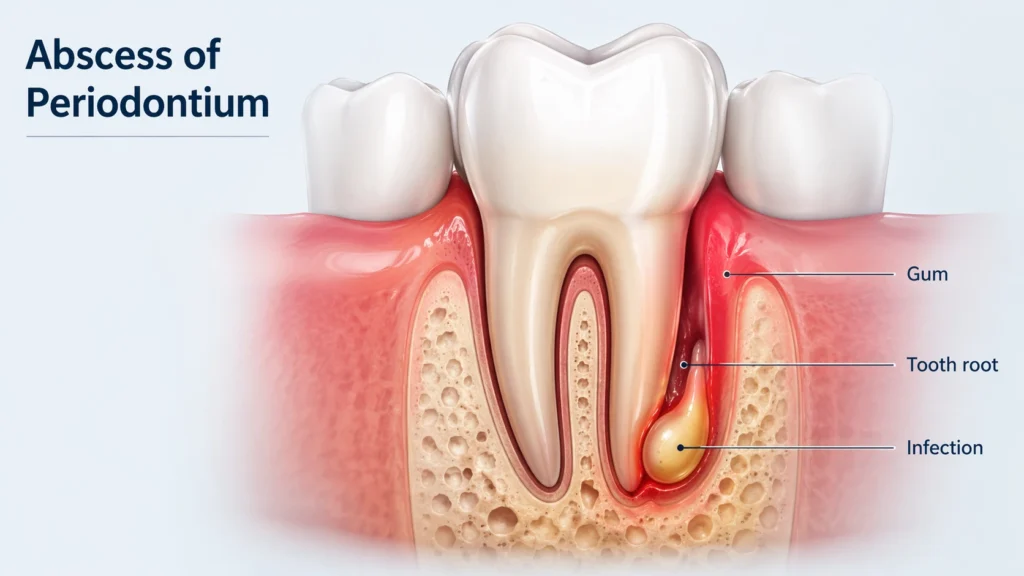
If you’ve ever felt a sudden, sharp pain in your gums that won’t go away, there’s a chance you’re dealing with an abscess of periodontium. It may start small, but ignoring it can turn into a serious dental problem very quickly.
This guide breaks everything down in simple words—no confusing medical jargon—so you can understand what’s happening and what to do next.
What Is an Abscess of Periodontium?
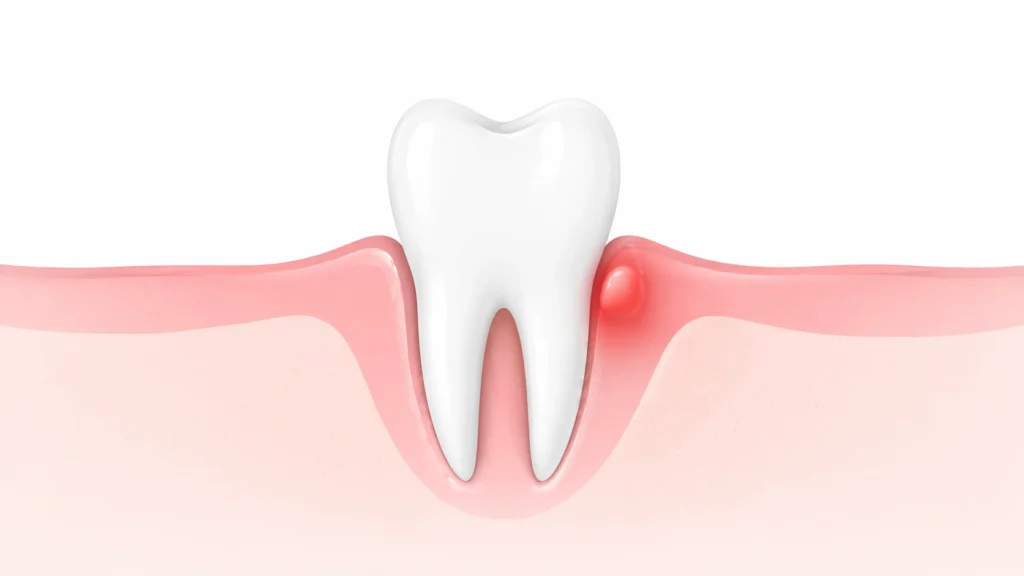
An abscess of periodontium is a painful infection in the gum tissues around your teeth. It happens when bacteria get trapped inside the gums, causing swelling, pus formation, and pressure.
Unlike a regular toothache, this condition is focused more on the gums rather than the tooth itself.
Think of it like this:
👉 Your gums are trying to fight off bacteria, and the result is a pocket of infection.
Why Does an Abscess of Periodontium Happen?
An abscess of periodontium doesn’t appear out of nowhere. There are clear reasons behind it, and most of them are preventable.
1. Gum Disease (Main Cause)
The most common reason is untreated gum disease. When plaque builds up, it leads to infection under the gums.
2. Food Getting Stuck
Small food particles stuck between teeth can trap bacteria and trigger an abscess of periodontium.
3. Poor Oral Hygiene
Not brushing or flossing properly allows bacteria to grow, increasing the risk.
4. Deep Gum Pockets
When gums pull away from teeth, bacteria settle deep inside, leading to infection.
5. Weakened Immune System
If your body is weak, it can’t fight infection well, making an abscess more likely.
Early Signs You Should Never Ignore
An abscess of periodontium often gives warning signs before it gets worse. Catching it early can save you from severe pain.
Common Symptoms:
- Sudden gum pain (sharp or throbbing)
- Swelling in the gums
- Redness around a tooth
- Pus discharge
- Bad taste in your mouth
- Pain when chewing
- Slight tooth movement
Serious Signs:
- Fever
- Swelling in face or jaw
- Difficulty opening mouth
👉 If you notice these, don’t wait—get help immediately.
Types of Abscess of Periodontium
Not all cases are the same. Understanding the type helps in proper treatment.
1. Gingival Abscess
Affects only the gum surface. Usually caused by trapped food.
2. Periodontal Abscess
This is the most common form of abscess of periodontium. It goes deeper into gum tissues and can damage bone.
3. Pericoronal Abscess
Occurs around partially erupted teeth, especially wisdom teeth.
How Is It Diagnosed?
A dentist can quickly identify an abscess of periodontium with a simple check.
Diagnosis Methods:
- Physical examination of gums
- Checking for pus or swelling
- X-rays (to see deeper infection)
- Measuring gum pockets
👉 It’s fast, simple, and painless in most cases.
Treatment Options That Actually Work
The good news? An abscess of periodontium is treatable—but timing matters.
1. Drainage of the Abscess
The dentist removes the pus to reduce pressure and pain.
2. Deep Cleaning (Scaling & Root Planing)
This removes bacteria and plaque from below the gum line.
3. Antibiotics
Used if the infection has spread or is severe.
4. Gum Surgery
In advanced cases, surgery may be needed to clean deep pockets.
5. Tooth Removal (Last Option)
If the tooth cannot be saved, extraction might be necessary.
Home Remedies (Temporary Relief Only)
Let’s be clear:
👉 Home remedies do NOT cure an abscess of periodontium.
But they can help reduce discomfort until you see a dentist.
Helpful Tips:
- Rinse with warm salt water
- Apply a cold compress
- Avoid chewing on that side
- Keep the area clean
⚠️ Never try to pop the abscess yourself.
What Happens If You Ignore It?
Ignoring an abscess of periodontium is risky.
Here’s what can happen:
- Infection spreads to other teeth
- Bone damage around teeth
- Tooth loss
- Infection entering bloodstream (rare but dangerous)
👉 What starts as gum pain can turn into a serious health issue.
How to Prevent Abscess of Periodontium
Prevention is easier—and cheaper—than treatment.
Daily Habits That Protect You:
- Brush twice a day
- Floss daily
- Use antibacterial mouthwash
- Avoid sugary foods
Regular Care:
- Visit dentist every 6 months
- Get professional cleaning
- Treat gum disease early
👉 Small habits make a big difference.
Who Is at Higher Risk?
Some people are more likely to develop an abscess of periodontium.
High-Risk Groups:
- Smokers
- Diabetics
- People with poor oral hygiene
- Those with existing gum disease
- People under stress
If you fall into these groups, extra care is essential.
Abscess of Periodontium vs Tooth Abscess
People often confuse the two.
Key Difference:
| Feature | Abscess of Periodontium | Tooth Abscess |
|---|---|---|
| Location | Gum tissue | Inside tooth |
| Cause | Gum infection | Tooth decay |
| Pain Type | Gum-focused | Deep tooth pain |
👉 Both are serious, but treatment differs.
When Should You See a Dentist?
Don’t wait for the pain to become unbearable.
Visit Immediately If:
- Pain lasts more than 2 days
- Swelling increases
- Pus is visible
- You have fever
👉 Early treatment = faster recovery.
Final Thoughts
An abscess of periodontium is not something to ignore. It may start as mild discomfort, but it can quickly turn into severe pain and long-term damage.
The good news?
✔ It’s preventable
✔ It’s treatable
✔ And it’s easy to manage if caught early
Take your oral health seriously. A few minutes of daily care can save you from major problems later