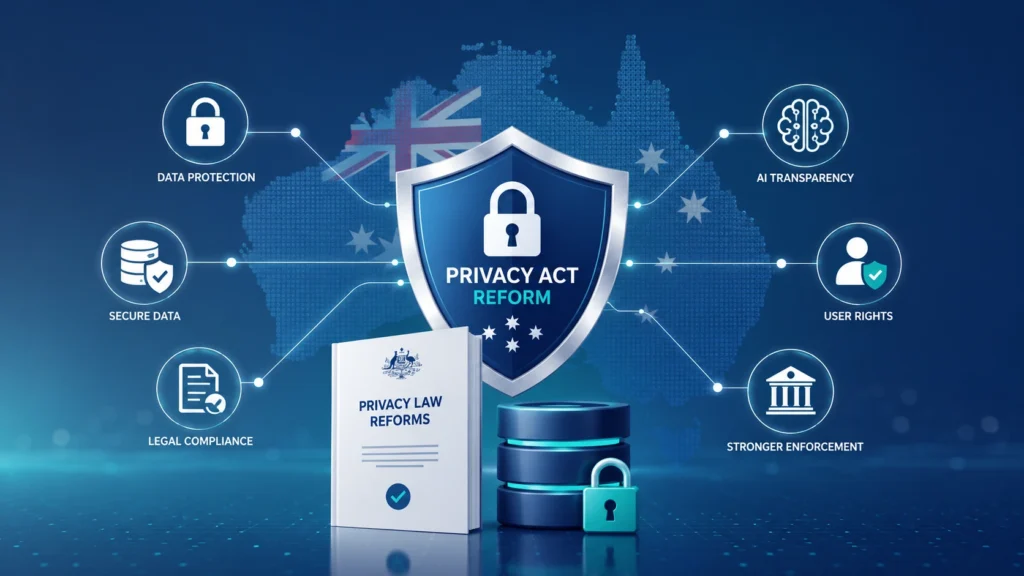
Australia’s privacy laws are going through the biggest update in years, and the changes are starting to affect businesses, government agencies, technology companies, and everyday Australians.
If you have been searching for australia privacy act reform news today, you have probably noticed a lot of discussion around stronger privacy protections, children’s online safety, AI transparency, and tougher penalties for organizations that misuse personal data.
The reforms are not just policy discussions anymore. Many changes are already law, while others are moving toward implementation during 2026 and beyond. Understanding what is happening now can help businesses prepare and help consumers understand their rights.
Australia Privacy Act Reform News Today: The Current Situation
The foundation of the current reforms is the Privacy and Other Legislation Amendment Act 2024, which passed Parliament in late 2024 and continues to roll out in stages. The reform package is considered the first major tranche of Australia’s broader privacy modernization effort.
The goal is simple: give Australians greater control over their personal information while updating laws that were written long before today’s data-driven economy, AI systems, and digital platforms became so powerful.
Recent developments in 2026 show that regulators and government agencies are now focusing heavily on implementation rather than just legislative debate.
Why Australia Decided to Reform Privacy Laws
Several factors pushed privacy reform to the top of the agenda:
- Large-scale data breaches affecting millions of people
- Growing use of artificial intelligence and automated decision-making
- Increased collection of personal information by apps and online services
- Concerns about children’s online privacy
- International pressure to align with modern privacy standards
Australians have become far more aware of how their information is collected, shared, and stored. Many privacy experts argued that existing laws no longer reflected the realities of modern technology.
The reforms aim to close that gap.
Key Changes Already Happening
Stronger Enforcement and Penalties
One of the most significant outcomes of the reforms is stronger enforcement.
Organizations that fail to protect personal information can face much larger penalties than before. Regulators have been given stronger tools to investigate breaches and hold companies accountable. This has changed the risk calculation for businesses handling customer data
For many companies, privacy compliance is no longer a legal box-ticking exercise. It has become a board-level issue.
Better Protection for Children’s Data
A major area of focus in the latest australia privacy act reform news today is online protection for children.
In March 2026, the Office of the Australian Information Commissioner released a draft Children’s Online Privacy Code for public consultation. The proposed rules would apply to certain online services, apps, games, websites, and platforms that children use.
Key proposals include:
- Considering the best interests of children when handling data
- Stronger controls around targeted advertising
- Additional consent requirements
- Greater transparency about data collection
- Options for deleting children’s personal information
These measures are designed to reduce privacy risks faced by young users in digital environments.
New Rights Around Automated Decision-Making
Artificial intelligence is influencing more decisions than ever before.
Companies increasingly use algorithms to determine eligibility for products, services, credit applications, hiring processes, and customer experiences.
How Automated Decision-Making Rules Will Work
Beginning in December 2026, organizations covered by the Privacy Act will face new transparency obligations relating to automated decision-making systems.
Businesses will need to explain:
- Whether automated systems are being used
- How personal information is involved
- When automated decisions could significantly affect individuals
This change reflects growing public concern about “black box” AI systems making important decisions without transparency.
For consumers, it means greater visibility into how technology affects outcomes that matter.
What Businesses Need to Do Now
Many organizations are already reviewing their privacy programs because the reforms are not limited to future requirements.
Companies should focus on several areas.
1. Review Privacy Policies
Privacy policies need to be updated to reflect current legal requirements.
Regulators have signaled increased scrutiny of privacy disclosures and transparency practices. Businesses should ensure policies accurately explain:
- What information is collected
- Why it is collected
- How it is used
- Who receives it
- Whether automated decision-making systems are involved
2. Examine Data Collection Practices
Many organizations collect more information than they truly need.
The reforms encourage businesses to reassess:
- Data minimization practices
- Retention periods
- Data-sharing arrangements
- Consent mechanisms
Collecting less data often reduces privacy risks and compliance costs.
3. Prepare for AI Transparency Rules
Organizations using AI tools should start preparing now rather than waiting for deadlines.
This includes:
- Mapping AI systems
- Identifying where personal information is used
- Assessing potential impacts on individuals
- Updating privacy notices
The businesses that prepare early will face fewer compliance challenges later.
The Growing Focus on AI and Privacy
AI is becoming one of the biggest privacy issues in Australia.
Privacy regulators increasingly recognize that automated systems can influence employment decisions, financial services, healthcare processes, and consumer experiences.
As AI adoption accelerates, regulators want greater transparency and accountability. The upcoming automated decision-making requirements are one of the clearest examples of this trend. (Herbert Smith Freehills)
Businesses that rely heavily on AI should expect continued regulatory attention in the coming years.
Are More Privacy Reforms Coming?
The short answer is yes.
The 2024 reforms were widely described as the first tranche rather than the final destination. Policymakers continue to discuss additional measures that could further strengthen privacy protections.
Topics still being debated include:
- Direct marketing rules
- Targeted advertising practices
- Additional consumer rights
- Data portability measures
- Further protections around emerging technologies
Industry groups, privacy advocates, and regulators continue to push for improvements in different areas.
While not every proposal will become law, privacy reform remains an active policy area in Australia.
What These Changes Mean for Ordinary Australians
For consumers, the reforms are largely positive.
The changes aim to provide:
- Greater transparency
- Stronger protections against misuse of personal information
- Better safeguards for children
- Increased accountability for organizations
- More visibility into AI-driven decisions
Consumers are becoming more aware of their digital rights, and lawmakers are responding to that shift.
That does not mean every privacy concern disappears overnight. Enforcement, compliance, and technological change will continue to shape how effective these reforms become.
However, Australians now have a stronger privacy framework than they did just a few years ago.
Challenges Still Ahead
Even supporters of the reforms acknowledge there are challenges.
Some businesses worry about compliance costs and regulatory complexity.
Privacy advocates argue that certain protections do not go far enough.
Technology continues evolving faster than legislation, creating ongoing pressure on policymakers to keep laws up to date.
The balance between innovation and privacy remains one of the most difficult questions facing regulators worldwide.
Australia’s reforms represent a significant step forward, but they are unlikely to be the final chapter.
Conclusion
The latest australia privacy act reform news today shows a clear direction: stronger privacy protections, greater accountability for organizations, enhanced safeguards for children, and increased transparency around AI-powered decision-making.
The Privacy and Other Legislation Amendment Act 2024 has already started reshaping Australia’s privacy landscape, and additional developments are expected throughout 2026 and beyond. Businesses should use this period to review their data practices, while consumers can expect more control and visibility over how their personal information is handled.
As technology continues to evolve, privacy reform will remain one of the most important legal and business issues in Australia.
FAQs
What is the latest update on Australia’s Privacy Act reforms?
The most significant recent developments include implementation of reforms introduced through the Privacy and Other Legislation Amendment Act 2024, consultation on the Children’s Online Privacy Code, and preparation for automated decision-making transparency requirements scheduled for December 2026.
When do the new AI transparency requirements start?
New transparency obligations related to automated decision-making are expected to take effect in December 2026 for organizations covered by the Privacy Act.
How do the reforms affect children online?
The proposed Children’s Online Privacy Code would require stronger protections for children’s personal information, including limits on targeted advertising and additional privacy safeguards.
Will small businesses be affected by privacy reforms?
Many businesses should monitor ongoing reforms closely. Several proposals and changes may expand privacy obligations and increase compliance expectations across different sectors.
Why are Australia’s privacy laws changing?
The reforms were driven by growing concerns about data breaches, AI technologies, digital platforms, online tracking, and the need to modernize laws for today’s digital environment.
What should businesses do right now?
Businesses should review privacy policies, assess data collection practices, evaluate AI systems, improve transparency, and prepare for upcoming compliance requirements before implementation deadlines arrive.