If you’ve ever typed “natzi or nazi” into Google, you’re not alone. It’s a common confusion. One spelling shows up in searches, comments, and even social media debates. The other carries heavy historical weight.
So what’s the truth?
Let’s break it down in the simplest way possible—no fluff, no confusion, just clear answers.
What Does “Nazi” Mean?
The word “Nazi” is a short form of the German political group called the National Socialist German Workers’ Party. This party rose to power in Germany in the 1930s.
Under its leadership, Germany became a dictatorship. The regime is most known for:
- Starting World War II
- Promoting extreme racist ideas
- Carrying out the Holocaust, where millions of people were killed
So when someone uses the word Nazi, they are referring to:
- A member of that political party
- Or someone who supports similar extreme beliefs today
This is not just a casual word—it has deep historical meaning and serious impact.
What Does “Natzi” Mean?
Now let’s talk about the other spelling: “natzi.”
Here’s the simple truth:
👉 “Natzi” is not a real word.
👉 It’s just a misspelling of “Nazi.”
People usually write “natzi” by mistake because:
- They mishear the pronunciation
- They are unsure of the correct spelling
- They type fast and don’t check
Sometimes, people also use “natzi” intentionally online to avoid filters or moderation systems.
But in proper writing, “natzi” is incorrect.
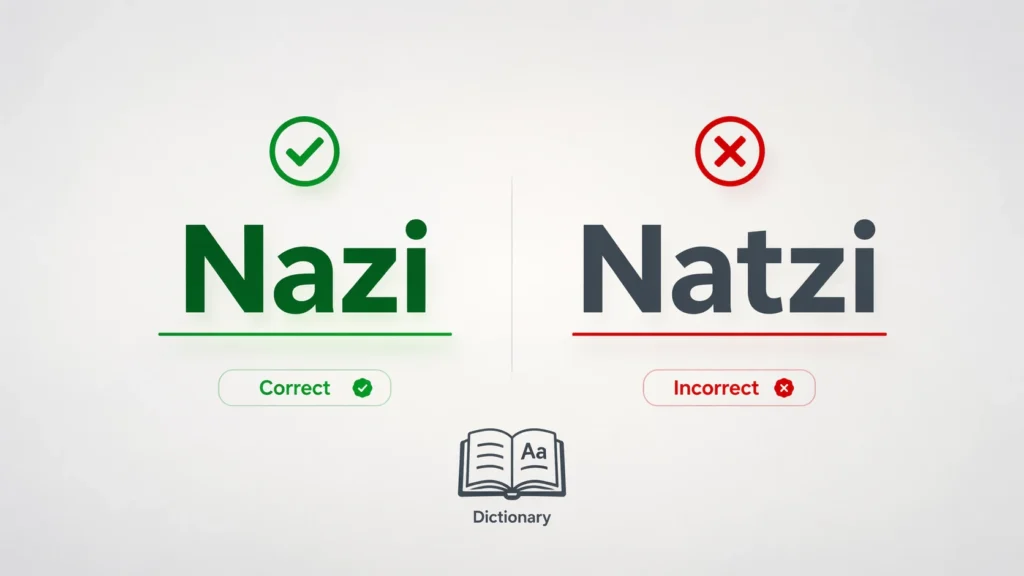
Natzi or Nazi: Which One Is Correct?
Let’s make it crystal clear:
- ✅ Nazi = Correct spelling
- ❌ Natzi = Incorrect spelling
If you’re writing an article, blog post, or anything meant for search engines, always use “Nazi.”
Using the wrong spelling can:
- Hurt your SEO
- Confuse readers
- Make your content look unprofessional
Why Do People Search “Natzi or Nazi”?
This keyword is popular for a reason. People are curious.
Here are the main reasons behind the search:
1. Spelling Confusion
Many people simply don’t know which spelling is right.
2. Learning History
Some users come across the word while reading about World War II and want clarity.
3. Online Trends
On social media, misspellings spread fast. One wrong version can go viral.
4. Avoiding Filters
Some users type “natzi” instead of “nazi” to bypass platform rules.
The Importance of Using the Right Word
This isn’t just about spelling. It’s about meaning.
The word Nazi is tied to real events in history that affected millions of lives. Using it incorrectly—or casually—can lead to misunderstandings.
When you use the correct term:
- You show respect for history
- You communicate clearly
- You build trust with your readers
A Quick Look at the Historical Context
To fully understand why this matters, you need a bit of background.
The Nazi regime in Germany lasted from 1933 to 1945. During this time:
- Political opposition was crushed
- Media was controlled
- Minorities were targeted
The most tragic part was the Holocaust, where around six million Jewish people were killed, along with millions of others.
Because of this history, the word Nazi is not just a label—it represents one of the darkest periods in human history.
Is “Natzi” Ever Acceptable?
Short answer: No.
There are only two cases where you might see “natzi”:
- As a typo
- As slang or intentional distortion online
Even in those cases, it’s not correct.
If your goal is to write clear, SEO-friendly, and trustworthy content, always stick with:
👉 Nazi (correct spelling)
SEO Tip: How to Use “Natzi or Nazi” Correctly
If you’re targeting the keyword “natzi or nazi”, here’s the smart way to use it:
- Use it in your title (like this article)
- Mention it naturally in the intro
- Clarify early that one is incorrect
- Focus mainly on the correct term: Nazi
This way, you:
- Capture search traffic
- Provide real value
- Avoid spreading misinformation
Common Mistakes People Make
Let’s clear up a few things quickly.
Mistake 1: Thinking Both Are Correct
They’re not. Only Nazi is correct.
Mistake 2: Using “Natzi” in Formal Writing
This makes your content look unprofessional.
Mistake 3: Ignoring the Meaning
Some people treat the word casually, but it has serious historical we
Simple Memory Trick
If you keep forgetting the spelling, try this:
👉 “Nazi” = No extra “t”
Short, simple, and easy to remember
Why This Keyword Matters for Content Creators
If you run a blog or website, the keyword “natzi or nazi” is actually useful.
Why?
Because it targets people who are:
- Searching for quick answers
- Curious about spelling
- Interested in history
By answering this clearly, you can:
- Rank on Google
- Get steady traffic
- Build authority in simple educational content
Final Answer: Natzi or Nazi?
Let’s end the confusion once and for all.
- “Nazi” is the correct spelling
- “Natzi” is just a mistake
If you remember one thing from this article, make it this:
👉 Always use Nazi, never natzi.
Conclusion
The debate around “natzi or nazi” is simple once you understand it.
One is real. One is not.
But beyond spelling, this topic connects to important history. That’s why it’s worth getting right.
Use the correct word. Keep your writing clean. And when in doubt, go with accuracy over guesswork.
That’s how you create content people trust—and content that ranks.