
Airports never sleep. Every day, thousands of passengers, aircraft, baggage carts, fuel trucks, and airport workers move through a busy environment where timing matters. A small delay in one area can quickly affect many flights.
This is where Aerobahn comes in.
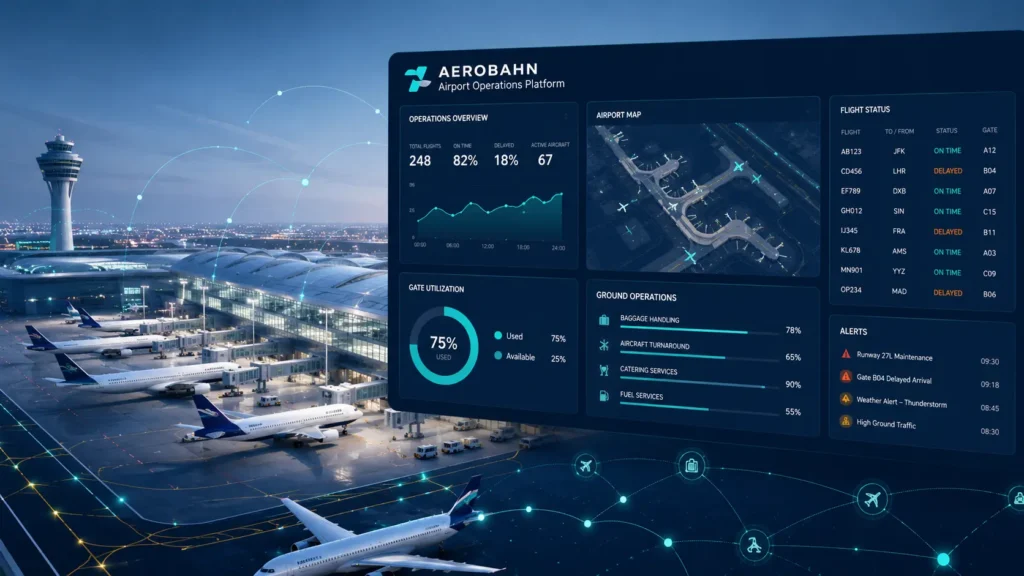
Aerobahn is an airport operations platform that helps airports, airlines, and ground handling teams see what is happening in real time. Instead of relying on phone calls, spreadsheets, or delayed reports, teams can access live operational data from one place.
As airports become busier and passenger expectations continue to rise, tools like Aerobahn have become an important part of modern airport management. In this article, we will explore what Aerobahn is, how it works, its key features, benefits, and why many airports depend on it to improve daily operations.
What Is Aerobahn?
Aerobahn is a real-time airport operations management system designed to improve communication, coordination, and decision-making across airport environments.
The platform collects operational information from multiple airport systems and displays it through a single dashboard. This allows airport staff, airlines, and ground service providers to monitor activities as they happen.
The main goal of Aerobahn is simple: give airport teams better visibility so they can make faster and smarter decisions.
Whether it is tracking aircraft movement, monitoring gate usage, or managing ground operations, Aerobahn helps keep everyone on the same page.

Why Airports Need Aerobahn
Airport operations involve many different groups working together:
- Airlines
- Airport authorities
- Ground handlers
- Security teams
- Maintenance crews
- Air traffic services
- Baggage operations
Without a centralized system, communication gaps can occur. These gaps often lead to delays, confusion, and operational inefficiencies.
Aerobahn helps solve these challenges by providing a shared operational view. Everyone can access the same information in real time, reducing misunderstandings and improving coordination.
This level of visibility is especially valuable during busy travel periods when airports must manage large numbers of flights and passengers.
How Aerobahn Works
The strength of Aerobahn lies in its ability to connect different airport systems and display information in an easy-to-understand format.
The platform gathers data from sources such as:
- Flight schedules
- Aircraft tracking systems
- Gate management systems
- Ground handling operations
- Airport resource management tools
- Baggage systems
After collecting this information, Aerobahn presents it through dashboards, maps, alerts, and reports.
Airport personnel can quickly see:
- Flight status updates
- Aircraft positions
- Gate availability
- Delays and disruptions
- Ground service progress
- Operational alerts
This real-time visibility allows teams to react quickly when issues arise.
Key Features of Aerobahn
Real-Time Flight Monitoring
One of the most important features of Aerobahn is real-time flight monitoring.
Airport staff can view live information about arriving and departing flights. This helps teams stay aware of schedule changes and operational updates.
When flights are delayed or rescheduled, Aerobahn immediately updates the information so teams can adjust their plans.
Airport Operational Dashboard
Aerobahn provides a centralized dashboard that combines information from multiple systems.
Instead of checking different software platforms, users can access critical operational data from a single screen.
This improves efficiency and reduces the time needed to find important information.
Interactive Airport Maps
Modern airports are complex environments.
Aerobahn uses interactive maps that show aircraft locations, gate assignments, service vehicles, and operational activities across the airport.
These visual tools help staff understand airport conditions at a glance.
Automated Alerts
Airport operations can change quickly.
Aerobahn provides automated alerts whenever significant events occur.
Examples include:
- Flight delays
- Gate conflicts
- Equipment issues
- Service delays
- Weather disruptions
These alerts help teams respond before small issues become larger problems.
Performance Reporting
Data is valuable only when it can be used to improve operations.
Aerobahn generates reports that help airport managers analyze performance trends.
These reports can be used to evaluate:
- Flight turnaround times
- Resource utilization
- Operational efficiency
- Delay causes
- Service performance
With this information, airports can identify opportunities for improvement.
Benefits of Using Aerobahn
Better Situational Awareness
Airport teams need accurate information to make good decisions.
Aerobahn provides a complete operational picture, allowing users to understand what is happening across the airport at any given moment.
This improved awareness supports faster and more effective decision-making.
Reduced Delays
Flight delays are expensive for airlines and frustrating for passengers.
Because Aerobahn helps teams identify issues early, airports can often respond more quickly and reduce operational disruptions.
Better coordination often leads to smoother airport operations.
Improved Communication
Many airport problems occur because information is not shared quickly enough.
Aerobahn creates a common operating picture that all stakeholders can access.
This reduces communication barriers and helps teams work together more effectively.
Increased Operational Efficiency
Managing airport resources efficiently is a major challenge.
Aerobahn helps optimize:
- Gate assignments
- Aircraft handling
- Ground services
- Staff deployment
- Equipment utilization
As a result, airports can operate more efficiently while maintaining service quality.
Enhanced Passenger Experience
Passengers may never see Aerobahn directly, but they benefit from its impact.
When airport operations run smoothly, passengers experience:
- Fewer delays
- Faster boarding
- Better communication
- Improved travel experiences
This makes Aerobahn an important tool for customer satisfaction.
Who Uses Aerobahn?
Aerobahn is used by a wide range of aviation organizations.
Airports
Airport operators use Aerobahn to monitor daily activities and coordinate resources.
The platform provides visibility across terminals, gates, runways, and support operations.
Airlines
Airlines rely on Aerobahn to stay informed about flight status and airport conditions.
This information helps them manage schedules and improve operational performance.
Ground Handling Companies
Ground service providers use Aerobahn to coordinate tasks such as:
- Aircraft servicing
- Baggage handling
- Refueling
- Catering support
Real-time information helps ensure that aircraft are serviced on time.
Airport Operations Centers
Many airports operate centralized control centers.
Aerobahn gives these teams a live operational view that supports faster decision-making and better coordination.
Aerobahn and Digital Transformation
The aviation industry is becoming increasingly data-driven.
Airports are investing in technology that improves visibility, automation, and efficiency.
Aerobahn supports this digital transformation by helping organizations move away from manual processes and disconnected systems.
Instead of relying on outdated methods, airport teams can access live operational intelligence from a centralized platform.
As airports continue to modernize, solutions like Aerobahn play an important role in supporting future growth.
Challenges Aerobahn Helps Solve
Airport operations can face many challenges every day.
Some common issues include:
Flight Disruptions
Weather conditions, technical issues, and scheduling conflicts can affect flights.
Aerobahn helps teams monitor disruptions and respond quickly.
Resource Conflicts
Multiple flights may compete for gates, equipment, or ground services.
The visibility provided by Aerobahn helps reduce these conflicts.
Communication Delays
Information delays often create operational problems.
Aerobahn improves communication by giving stakeholders access to shared real-time data.
Complex Airport Environments
Large airports can manage hundreds or even thousands of daily movements.
Aerobahn helps simplify these complex operations through visual dashboards and live monitoring tools.
The Future of Aerobahn
The future of airport operations depends heavily on technology.
As airports continue to grow, operational complexity will increase.
Platforms like Aerobahn are expected to become even more valuable because they support:
- Real-time decision-making
- Data-driven operations
- Operational efficiency
- Improved passenger experiences
- Better collaboration between stakeholders
Future enhancements may include deeper automation, advanced analytics, artificial intelligence support, and expanded predictive capabilities.
These developments could help airports identify potential issues before they affect operations.
Conclusion
Aerobahn has become an important tool in modern airport operations. By providing real-time visibility, improved communication, and centralized operational intelligence, it helps airports, airlines, and ground service providers work more effectively.
The ability of Aerobahn to bring together information from multiple systems allows airport teams to make faster decisions, reduce delays, and improve overall efficiency.
As the aviation industry continues to evolve, Aerobahn remains a valuable solution for organizations that want smoother operations, better coordination, and a stronger passenger experience.
For airports focused on operational excellence, Aerobahn is more than just software—it is a platform that helps keep the entire airport ecosystem moving efficiently every day.